What If Your Online Courses Could Organize Your Life—Not Just Your Learning?
Imagine opening your favorite learning platform and finding not just lessons, but your to-do list, your weekly goals, and even your family’s schedule—quietly organized, effortlessly updated. What if the app you use to learn Spanish or design could also help you feel calmer, more in control, and more like you? It’s not magic—it’s how online learning tools are quietly becoming the backbone of a well-organized life. For women juggling home, family, and personal dreams, this shift isn’t just convenient. It’s empowering. And the best part? You don’t need a new app, a big budget, or a tech upgrade. You might already have everything you need, right in your pocket.
The Hidden Superpower of Online Learning Platforms
We often think of online courses as quiet classrooms tucked into our phones—places to learn something new when the house is finally still. Maybe you’ve taken a watercolor class during naptime or practiced mindfulness between school pickups. But what if your learning app could do more than teach you a skill? What if it could help you run your life?
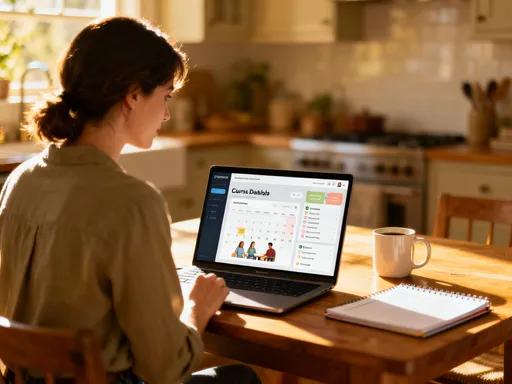
Today’s top learning platforms come with built-in tools most of us barely notice: progress bars, weekly check-ins, goal trackers, and reminder systems. At first glance, these features exist to keep you on track with your lessons. But dig a little deeper, and you’ll see they’re designed to shape behavior—yours. And that’s where the magic begins.
Take Sarah, a mom of two from Austin, who started using a language-learning app to brush up on French before a family trip. She loved the daily streak counter and the little 'Well done!' pop-up after each lesson. But what she didn’t expect was how those same nudges helped her stay consistent with other parts of her life. She began linking her '5-minute lesson' habit to other small tasks—packing lunches the night before, walking after dinner, even calling her sister once a week. The app didn’t change. Her mindset did.
Platforms like these are built on behavioral science. They use gentle repetition, visual rewards, and structured pacing to keep learners engaged. But those same principles apply perfectly to life management. When you complete a lesson, your brain gets a tiny hit of satisfaction. Do it daily, and that feeling becomes a habit. Now imagine that same system helping you stay on top of pediatrician appointments, meal planning, or your own fitness goals. That’s not science fiction. It’s already happening—and you’re already using the tools.
Think about it: your course dashboard shows completed modules, upcoming tasks, and long-term progress. Doesn’t that sound a lot like a personal planner? The difference is, this one feels lighter, friendlier, and more forgiving. There’s no red ink for missed days, no guilt for falling behind. Just a simple 'Pick up where you left off'—a kindness we rarely extend to ourselves.
From Lesson Plans to Life Plans: How Learning Structures Can Shape Your Day
Have you ever noticed how much calmer you feel when your day has a rhythm? Not a rigid, military-style schedule—but a gentle flow. Wake up, make coffee, help the kids, check in with yourself. That sense of order doesn’t happen by accident. It’s created. And one of the best-kept secrets of highly organized people isn’t that they do more. It’s that they structure more.
Online courses are masters of structure. They break big goals into weekly modules. Each lesson builds on the last. There’s a clear beginning, middle, and end. Sound familiar? That’s because it’s the same logic productivity coaches use to help people manage time, reduce stress, and feel more in control.
Meet Lisa, a school administrator and mom of three from Portland. Her mornings used to be chaos—rushing, forgotten homework, spilled cereal, last-minute outfit changes. She felt frazzled before 8 a.m. every day. Then she started taking an online course on mindful parenting. The course was split into seven weekly modules, each with short videos, reflection prompts, and a 'try this today' suggestion.
What Lisa didn’t plan was how that structure would spill over into her mornings. She began thinking of her family routine like a course module. Monday was 'Smooth Mornings 101': prep backpacks the night before. Tuesday was 'Breakfast Basics': set the table the night before. Wednesday: 'Clothes Check'—lay out outfits on Tuesday evening. Each day had one small, focused goal—just like her lessons.
Within two weeks, the change was real. The house wasn’t perfect, but it was calmer. The kids knew what to expect. And Lisa? She finally had time to sip her coffee while it was still hot. She didn’t buy a new planner or download a fancy app. She just borrowed the rhythm of her course and made it her own.
This is the quiet power of learning design. When we follow a course, we’re not just absorbing information—we’re practicing consistency, patience, and small-step progress. And those skills don’t stay in the classroom. They move with us, shaping how we approach everything from laundry to bedtime routines.
Turning Goals into Habits—One Click at a Time
We’ve all been there. January rolls around, and we’re full of energy—ready to eat better, move more, read more, be more. By February, the gym bag is back in the closet, the journal is blank, and the healthy meal plan is a distant memory. Why does motivation fade so fast? Because willpower is unreliable. But systems? Systems can carry you when motivation runs out.
Online learning platforms know this. That’s why they don’t ask you to complete a 40-hour course in one weekend. Instead, they break it down. Five minutes a day. One lesson at a time. This approach—called micro-learning—isn’t just about making content easier to digest. It’s about training your brain to expect small wins.
And here’s the beautiful part: that same training can help you build life habits, not just learning ones. When you get used to opening an app every day and checking off a tiny task, your brain starts to crave that sense of completion. That’s why streaks work. That’s why progress bars feel so satisfying. They’re not just tracking learning—they’re building discipline.
Consider Maria, a nurse and single mom from Miami, who wanted to create a better bedtime routine for her 8-year-old. She knew screens before bed were a problem, but every night ended the same: 'Just five more minutes!' She tried rules, timers, even bribes. Nothing stuck.
Then she started taking a short online course on children’s sleep habits. Each lesson was 4 minutes long. After watching one, she’d do a quick reflection in the app’s notes section: 'Tonight, we’ll read instead of watch cartoons.' She didn’t change everything at once. Just one small shift per week.
Because the course was so easy to complete, she never missed a day. And that daily rhythm spilled over into bedtime. Soon, her son began asking, 'Are we doing our calm-down routine tonight?' The change wasn’t loud or dramatic. It was quiet, steady, and lasting—because it was built on consistency, not intensity.
This is the real lesson here: big goals don’t fail because we’re lazy. They fail because they’re too big. But when you break life down into 'lessons'—five minutes of stretching, one healthy meal swap, one family conversation a day—you create a system that works with your life, not against it.
Syncing Life and Learning: When Your Course Remembers What You Forgot
Let’s be honest—our brains are full. Between school forms, doctor visits, grocery lists, and birthday parties, it’s a miracle we remember to pay the electric bill. We don’t need more to remember. We need systems that remember for us.
Most online learning platforms come with smart reminders: 'Don’t forget your quiz tomorrow!' 'You’re 3 lessons from your weekly goal!' These alerts are designed to keep you engaged. But what if you used them for more than quizzes?
Many platforms let you customize notifications or sync with your calendar. That means the same alert that reminds you to finish a lesson can also remind you to call your mom, refill a prescription, or pack your daughter’s soccer gear. The tool doesn’t care what the task is. It just helps you remember.
Take Diane, a teacher from Denver, who became her aging parents’ primary caregiver. Between her job and her own family, she often forgot small but important things—like when her dad’s blood pressure meds needed refilling or when her mom’s weekly bridge game was. She felt overwhelmed and guilty.
Then she realized her wellness course had a reminder feature. She started using it differently. Instead of just 'Complete Module 3,' she renamed the alert: 'Call Dad – med check.' She added another: 'Mom’s bridge day – send good luck text.' She even used the course calendar to block time for her own self-care: 'Yoga break – 10 minutes.'
It wasn’t a perfect system. But it was simple, familiar, and already part of her routine. She didn’t have to learn a new app or set up complex automations. She just repurposed what she already used. And slowly, the guilt faded. She wasn’t forgetting as much. She felt more present, more capable.
This is where tech becomes truly helpful—not by doing everything for us, but by fitting into our lives in quiet, practical ways. Your learning app doesn’t need to be a full-blown life manager. It just needs to be a gentle nudge at the right time. And sometimes, that’s enough to keep everything from falling apart.
Your Progress, Your Power: Seeing Growth Beyond Grades
One of the most powerful features of online learning platforms is the progress dashboard. It shows how far you’ve come—lessons completed, skills earned, streaks maintained. For some, it’s just data. For others, it’s proof.
Proof that you showed up. That you kept going. That you’re growing.
As women, we often measure our worth by how much we do for others. Did the kids eat well? Was dinner on time? Did everyone get to practice? We rarely pause to ask: What did I learn? How have I grown? Where am I making progress—just for me?
The dashboard changes that. It creates space for self-recognition. When you see that you’ve completed 12 lessons in a mindfulness course, it’s not just a number. It’s a story: 'I made time for myself. I showed up, even when I was tired. I’m learning to be calmer, more centered.'
That’s exactly what happened to Elena, a therapist and mom from Seattle. She started an online course on emotional resilience during a tough season—her son’s ADHD diagnosis, her father’s surgery, and her own burnout. She didn’t have hours to spare. Some days, she only did 3 minutes of the lesson.
But she kept the streak alive. And every week, she’d look at her progress bar. It wasn’t about finishing fast. It was about not giving up. Over time, she noticed something: she was reacting less, listening more, breathing deeper. The course didn’t fix everything. But it gave her a mirror—a way to see her own growth.
That visual feedback is powerful. It turns invisible effort into visible progress. And that visibility builds confidence. You start to believe: 'If I can do this, what else can I do?' That belief doesn’t just stay in the learning app. It follows you into the kitchen, the carpool line, the PTA meeting. You carry it with you.
So yes, the dashboard tracks lessons. But it also tracks resilience, courage, and self-worth. And for busy women who rarely see their own progress, that’s priceless.
Learning with Loved Ones: Shared Goals, Stronger Connections
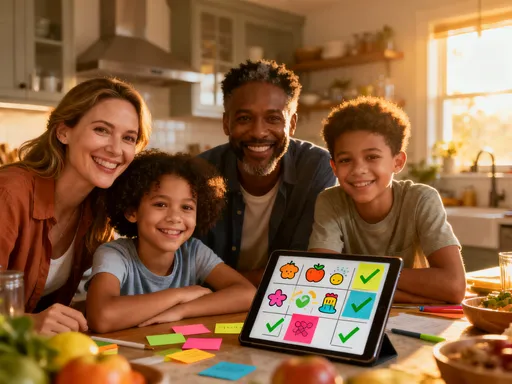
We often think of learning as a solo act. Headphones on, screen glowing, the world fades away. But many platforms now offer shared goals, family plans, or group challenges. And when used intentionally, these features can do more than teach skills—they can strengthen relationships.
Think about it: how often do we plan activities just for fun with our loved ones? Between schedules, screens, and stress, quality time can feel forced. But learning together? That’s different. It’s purposeful. It’s bonding. It’s growth—in more ways than one.
Take Grace and her sister, both mothers in their 40s, living in different states. They loved each other but rarely connected deeply. Phone calls were short: 'How’s the kids? Busy? Me too. Talk later.' Then they joined the same online course on mindful living. They didn’t do it to 'fix' anything. They just wanted to feel calmer.
But something shifted. Each week, they’d text about the lesson: 'Did you try the breathing exercise?' 'I loved that journal prompt!' They started sharing small wins: 'I didn’t yell when the kids spilled juice!' 'I finally took a walk alone!' What began as a learning experiment became a lifeline.
They weren’t just learning mindfulness. They were rebuilding their connection. The course gave them a shared language, a reason to check in, and a safe space to be honest. They weren’t performing. They were growing—together.
The same can happen with partners, teens, even aging parents. A budgeting course can become a tool for financial teamwork. A cooking class can turn into a weekly family ritual. The learning isn’t the goal. The togetherness is.
And in a world that pulls us in a hundred directions, that kind of intentional connection is rare—and deeply nourishing.
Making It Yours: Simple Steps to Turn Any Course into a Life Tool
So how do you start? You don’t need a new app. You don’t need to be tech-savvy. You just need to shift your mindset. Your learning platform isn’t just a classroom. It’s a toolkit. And you’re the designer.
Here’s how to begin—no jargon, no pressure:
First, pick one area of your life that feels messy. Maybe it’s meal planning, family communication, or your own self-care. Now, open your learning app. Find a course—even one that’s not directly related. Can you borrow its structure? For example, if you’re taking a photography course with weekly modules, rename them: 'Week 1: Family Check-In,' 'Week 2: Kitchen Reset,' 'Week 3: Me-Time Audit.'
Next, use the note feature. Most platforms let you jot down thoughts after each lesson. Start using it as a mini-journal. After your lesson, write one thing you’re proud of, one thing you’ll try tomorrow, or one win from the day. It doesn’t have to be long. Just honest.
Then, customize your reminders. If your app sends a 'Don’t forget your lesson!' alert, change the message. Make it say: 'Time to call Mom,' or 'Prep tomorrow’s outfits,' or 'Breathe for 2 minutes.' The system stays the same. The purpose shifts.
You can even use the progress tracker to monitor non-academic goals. Finished a lesson? Great. Now check off 'Packed healthy lunches all week' or 'Had one screen-free evening with the kids.' Let the app celebrate those wins too.
The key is to start small. Pick one feature. Try it for a week. See how it feels. If it works, keep it. If not, tweak it. This isn’t about perfection. It’s about making your tools work for you.
Because here’s the truth: you don’t need more apps. You don’t need more time. You just need to see what you already have in a new way. Your online course isn’t just teaching you a skill. It’s modeling a calmer, more intentional way to live. And every time you log in, you’re not just learning. You’re building a life that feels more like yours.
So go ahead. Open that app. Look past the lessons. See the structure, the rhythm, the gentle nudges. They’re not just for learning. They’re for living. And maybe—just maybe—they’re the quiet support you’ve been looking for all along.