Beyond the Scan: How a Simple QR Code Keeps Me on Track Every Day
Life gets busy—between work, family, and trying to grow into the person I want to be, it’s easy to lose sight of my goals. But recently, something small made a big difference: a QR code on my fridge. It sounds simple, maybe even silly, but scanning it every morning changed how I plan, reflect, and move forward. This isn’t about flashy tech—it’s about how a tiny digital tool quietly transformed my daily rhythm, kept me honest, and helped me grow without overwhelm. It didn’t replace my planner or to-do list. Instead, it became the bridge between intention and action—the gentle nudge I didn’t know I needed.
The Morning Ritual That Changed Everything
My day used to start with a scroll—endless emails, news headlines, social media updates. By the time I poured my coffee, my mind was already crowded. I’d forget what I wanted to focus on, what mattered most, or even what I promised myself I’d do this week. Then one Monday, I tried something different. I scanned a QR code stuck to the side of my fridge. Just one tap. And there it was—my goal page. Clean. Simple. Mine. No distractions, no noise. Just three focus areas for the week, a few checkboxes, and a little space to write how I was feeling. That small act changed everything.
Scanning that code became my anchor. It wasn’t flashy or automated. No AI sent me motivational quotes or analyzed my habits. It was just a static webpage I built myself, linked to a QR code I printed and laminated. But because it was so easy to access—right where I stood every morning with my coffee—it became part of my routine without effort. I didn’t have to remember to open an app or log in. I didn’t have to search for my journal. One tap, and there it was. My priorities. My progress. My reminder of who I was trying to become.
What surprised me most was how this tiny ritual built consistency. At first, I thought, This won’t last. But because it was so effortless, I kept doing it. And over time, that consistency became discipline. I started waking up just a few minutes earlier to scan, reflect, and set my intention. It wasn’t about being perfect. Some days, I didn’t check off a single box. But seeing the page every day kept me honest. It reminded me that showing up—even imperfectly—was enough. And that shift, small as it seemed, changed how I moved through my days. I felt more grounded. More in control. Like I wasn’t just reacting to life, but actually shaping it.
From Overwhelm to Clarity: Why Goals Fall Apart
We’ve all been there. January rolls around, and we’re full of energy—ready to exercise daily, read more, eat better, be more present with our kids. But by February, those goals fade. Not because we don’t care. Not because we’re lazy. But because life happens. The kids get sick. Work gets busy. The laundry piles up. And somewhere in the chaos, our good intentions get buried under sticky notes we never see or reminders we silence and forget.
I used to keep my goals in my notes app, buried under grocery lists and school pickup times. Or I’d write them in a beautiful journal—once. I’d open it a few days later, feel guilty for not writing, and close it again. The problem wasn’t my motivation. It was access. If I couldn’t see my goals every day, in a way that invited engagement, they became invisible. And what’s invisible is easy to ignore. I realized I needed a system that met me where I already was—in my kitchen, with my coffee, in the middle of my real life.
That’s when I started thinking about visibility. What if my goals weren’t hidden in an app or a notebook? What if they were right in front of me, every single morning? I didn’t need another complicated productivity tool. I didn’t need a $10 app with fancy analytics. I needed something simple. Something I could interact with in under 30 seconds. That’s when the idea hit me: a QR code. It’s something we see every day—at restaurants, on flyers, in stores. We scan them without thinking. So why not use that same habit for something meaningful? Why not make my goals as easy to access as a menu or a discount coupon?
The truth is, most goal-tracking systems fail because they add friction. They require logging in, navigating menus, or remembering to open them. But a QR code removes all of that. It’s instant. It’s frictionless. And because it’s so simple, it actually works. I stopped fighting my forgetfulness and started working with it. I placed the code where I couldn’t miss it—on the fridge, right next to the coffee maker. Now, scanning it became as automatic as pouring my morning cup. And that tiny shift—making my goals visible and accessible—was the missing piece I’d been searching for.
How a QR Code Became My Personal Accountability Partner
I’ll be honest—I didn’t think a QR code could hold me accountable. But it does. Not because it scolds me or sends me alerts. But because it’s always there. Waiting. Quiet. Consistent. Every morning, when I scan it, I see what I said I’d do. I see what I’ve already accomplished. And I see what’s still on my list. No judgment. Just truth.
Here’s how I set it up: I created a simple webpage using a free website builder. It’s hosted on a private link—no password, no login. Just a clean page with three sections: personal growth, family connection, and self-care. Each week, on Sunday evenings, I spend about eight minutes updating it. I write my three main goals for the week—like “read 50 pages,” “have one screen-free dinner with the kids,” or “take a 15-minute walk three times.” Then I add checkboxes next to each one. At the bottom, there’s a small text box where I can write a sentence about how I’m feeling or what I learned.
That’s it. No graphs. No data tracking. No complicated dashboards. Just me, my goals, and a little space to reflect. When I scan the code each morning, I see that page instantly. I check off what I did the day before. I read my weekly focus. And I set my intention for the day. It takes less than a minute. But that minute matters. It keeps me connected to my values. It reminds me that small actions add up. And it creates a sense of momentum—especially when I see a streak of checkmarks building up.
What I love most is that it’s not about perfection. Some weeks, I only check off one or two items. And that’s okay. The page doesn’t shame me. It doesn’t tell me I failed. It just shows me where I am. And that honesty has been more motivating than any app promising “10x productivity.” Because now, accountability isn’t something I dread. It’s something I look forward to. It’s my quiet conversation with myself—a moment of clarity in the middle of a busy day.
Designing the System: Simple, Human, and Sustainable
One of the biggest mistakes we make with productivity tools is overcomplicating them. We download apps with every feature imaginable—reminders, timers, progress charts, integration with calendars. And then we spend more time managing the tool than actually doing the work. I learned this the hard way. I tried every app, every planner, every method. But nothing stuck—until I embraced simplicity.
The power of my QR code system isn’t in its features. It’s in its absence of them. I didn’t want something that analyzed my behavior or predicted my habits. I wanted something human. Something I could relate to. So I designed the page to feel personal, not robotic. I chose a clean font. I used soft colors. I left plenty of white space. And I kept the language simple—like I was writing a note to a friend.
The technical setup was easy. I used a free website builder that lets you create a single page without coding. I uploaded it to a private link and generated a QR code using a free online tool. I printed it, laminated it, and stuck it to the fridge with a magnet. That’s all it took. No subscription. No monthly fee. No learning curve. And because it’s just a static page, it loads instantly—even on a slow connection.
Updates take less than ten minutes a week. I don’t overthink it. I just ask myself: What three things would make this week feel meaningful? Then I type them in, save the page, and that’s it. The simplicity makes it sustainable. I don’t burn out on it. I don’t feel pressure to “optimize” it. It’s not a project. It’s a practice. And because it’s so low-effort, I’ve kept it up for over a year now—longer than any app or planner I’ve ever used.
Most importantly, it supports my values, not someone else’s idea of productivity. I’m not tracking hours or trying to “hack” my focus. I’m tracking what matters to me—connection, growth, balance. And that alignment is what makes it stick. When a tool reflects who you are, it doesn’t feel like work. It feels like home.
Real-Life Impact: Small Shifts, Big Changes
You might think, Can a QR code really change your life? And honestly, no—it can’t. But the habit it supports can. Over the past year, this small daily ritual has led to real, tangible changes. I read four more books than I did the previous year. I started meditating—just five minutes a day, but consistently. I had weekly game nights with my kids, which became something we all looked forward to. I even started a small garden, something I’d been putting off for years.
None of these were grand transformations. No drastic weight loss. No career leap. But they added up. And what surprised me most was how my mindset shifted. I stopped feeling guilty for not doing enough. Instead, I started feeling proud of showing up—even in small ways. The QR code didn’t do the work for me. But it made the work visible. It turned abstract goals into concrete actions. And it reduced decision fatigue—because every morning, I knew exactly what I wanted to focus on.
Friends started noticing. “You seem calmer,” one said. “More present.” Another asked, “What’s your secret?” When I told them about the QR code, most laughed at first. “You’re tracking your life with a barcode?” But when I showed them how simple it was—and how effective—it sparked curiosity. One friend made her own for fitness goals. Another used it for a gratitude journal. A third started tracking her monthly budget with it.
What I love is that it’s adaptable. It’s not one-size-fits-all. You can use it for anything—learning a language, practicing kindness, saving money, improving sleep. The format stays the same, but the content changes with your life. And because it’s so easy to update, it grows with you. It’s not a rigid system. It’s a flexible companion. And that flexibility is what makes it powerful. It doesn’t force you into a mold. It supports you as you are—and as you want to become.
Sharing the Habit: How It Strengthened My Family
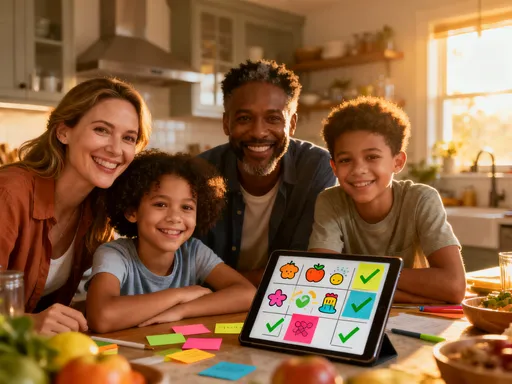
One of the most unexpected benefits was how it brought my family closer. I decided to create a second QR code—this one for family goals. I printed it on colorful paper and stuck it to the fridge right next to mine. It links to a simple page with three shared goals for the week: things like “eat dinner together without phones,” “spend 20 minutes outside as a family,” or “do a puzzle before bedtime.”
At first, I wasn’t sure my partner would buy in. But one evening, I showed him the page. “Want to check it together?” I asked. He scanned it, read the goals, and said, “I like this.” Now, we both scan it every few days. We check off what we’ve done. We talk about what’s working. And every Sunday, we update it together. It’s become our weekly family check-in—a moment of connection in the middle of our busy lives.
Even the kids got involved. My daughter made her own goal page—she drew pictures of things she wanted to do, like “read a chapter book” and “help bake cookies.” I turned it into a simple webpage and gave her a laminated QR code she could keep in her backpack. Now, she scans it every afternoon and checks off her tasks with a big smile. It’s not about perfection. It’s about participation. And that’s what matters.
This shared system didn’t just help us track goals. It sparked conversations. It created moments of teamwork. It reminded us that we’re in this together. Technology, which often pulls us apart—phones at the dinner table, screens in the living room—became a tool for connection. It didn’t replace family time. It enhanced it. It gave us a shared language, a common focus, and a way to celebrate small wins together. And that, more than anything, has been the greatest gift.
Why This Isn’t Just a Hack—It’s a Mindset
If you take away one thing from this, I hope it’s this: the most powerful tools aren’t the ones that do the most. They’re the ones that help you do what matters—without getting in your way. A QR code isn’t magic. But what it represents is. It’s about designing your environment to support the person you want to be. It’s about making your intentions visible, accessible, and part of your daily rhythm.
So much of personal growth is sold as a battle—against laziness, against distraction, against yourself. But what if it didn’t have to be? What if, instead of chasing motivation, we built systems that made it easier to succeed? That’s what this is. It’s not about willpower. It’s about design. It’s about placing a gentle reminder exactly where you need it—on the fridge, in the kitchen, in the middle of your real life.
And when technology fades into the background—when it’s so simple it feels invisible—it becomes powerful. It stops being a distraction and starts being a support. It doesn’t replace your values. It reflects them. It doesn’t demand your attention. It earns it—because it’s useful, because it’s kind, because it feels like you.
So maybe you don’t need another app. Maybe you don’t need a complicated system. Maybe all you need is one small, intentional step. A printed code. A simple page. A daily scan. And from that tiny action, something bigger can grow—consistency, clarity, connection. That’s the quiet revolution waiting in plain sight. Not in the latest gadget. But in the way we choose to use the tools we already have. Because sometimes, the smallest changes lead to the deepest transformations. And all it takes is one tap to begin.