Tracked 30 Family Read-Aloud Sessions: This App Made Us Closer Without the Stress
Remember those bedtime stories when your child snuggled close, eyes wide with wonder? As kids grow, that magic fades—homework, screens, and schedules take over. I missed our connection too, until we tried a simple reading app that changed everything. Not only did we read more, but we started *talking* more. It wasn’t about tracking pages or rewards—it became a bridge back to each other, one chapter at a time.
The Slow Drift: How Busy Life Silenced Our Storytime
There was a time when storytime was non-negotiable. Every night, like clockwork, we’d tuck in, open a book, and drift into another world. My daughter would rest her head on my shoulder, her fingers tracing the pictures, asking questions that made me pause and think. My son, always the quiet observer, would chime in with the funniest lines, making us all laugh. Those moments weren’t just about reading—they were about being together, fully present in a way that felt rare and precious.
But then life changed. Not all at once, but in quiet, almost invisible shifts. There were after-school clubs, piano lessons, soccer practices. I started bringing work home more often, convinced I was just “catching up” for a few extra minutes. My phone buzzed constantly—emails, messages, calendar alerts. The bedtime routine became rushed. “Just one page,” I’d say. Then it became, “Maybe tomorrow night.” And before I knew it, storytime had slipped away completely.
The real wake-up call came one evening when my daughter looked up from her tablet and asked, “Do we still do that?” I froze. “Do what?” I asked, though I already knew. “You know… read together. Like we used to.” Her voice was soft, not accusatory, but it hit me like a wave. I realized we hadn’t read a book aloud in weeks—maybe months. And it wasn’t just the books we’d lost. It was the quiet intimacy, the shared laughter, the way we used to end the day feeling connected, not just coexisting under the same roof.
I thought about how much of our interaction had become functional. “Did you finish your homework?” “Don’t forget your lunch.” “Turn off the light.” There was love, of course—so much love—but the emotional texture of our days had flattened. We were doing things *for* each other, but not much *with* each other. I missed the way stories used to open doors—into her imagination, into his thoughts, into conversations that surprised me. I realized then that we weren’t just missing reading. We were missing a way to truly see each other.
The Screen Trap: When Technology Pushed Us Apart
It’s funny how technology promises to bring us closer but often does the opposite. We all have devices now—me, my husband, the kids. We’re more “connected” than ever, yet sometimes I feel like we’re living in separate digital bubbles. Dinner used to be a time to talk, but now it’s common to see my son scrolling through short videos, my daughter texting a friend, and me—well, I’ll admit it—checking work emails under the table. We’re in the same room, but miles apart.
I tried to fix it the obvious way: screen bans. “No phones at dinner.” “No tablets before bed.” But that only led to tension. The kids would sigh dramatically, roll their eyes, and sneak glances when they thought I wasn’t looking. I felt like the bad guy, the rule enforcer, instead of the mom they wanted to talk to. And honestly, I didn’t want to demonize technology. It’s part of our lives. I use it to stay organized, to stay in touch with family, to learn new things. I just didn’t want it to replace the real, warm, messy moments of being a family.
I started looking for apps that could help—something that encouraged reading, maybe even made it fun again. But so many of them felt… cold. They tracked reading time like a stopwatch, gave stars for finishing books, compared your child’s progress to others. One app even sent a weekly report, like a performance review. “Your child read 27% less than the national average.” Who needs that kind of pressure? That wasn’t what I wanted. I didn’t need a report card on our reading habits. I needed a way to bring back the joy, the connection, the feeling that we were sharing something meaningful.
I remember showing one of those apps to my daughter. She looked at the screen, frowned, and said, “It feels like homework.” And she was right. It wasn’t inviting. It didn’t make her want to curl up with a book. It made her feel watched, judged, like she had to perform. I realized then that the problem wasn’t just the screens—it was how we were using them. What we needed wasn’t another tool to measure us, but one that could help us *meet* each other again, in a space that felt safe, warm, and human.
A Different Kind of Reading App: Designed for Connection, Not Control
Then I found an app that didn’t feel like homework. In fact, it didn’t feel like an app at all—not the way most do. It didn’t ask, “How many pages did you read?” or “What score did you get on the quiz?” Instead, the first thing it said was, “What did you think of the main character?” Or, “Ask your child: If you could live in this story, where would you want to go?” These weren’t questions to test knowledge. They were invitations—to wonder, to imagine, to talk.
The app didn’t track minutes. It didn’t give badges or rewards. What it did was create space. After each chapter, it offered gentle prompts—simple, open-ended questions that felt natural, not forced. “What part made you laugh?” “Was there a moment that surprised you?” “If you could ask the author one question, what would it be?” I loved that it didn’t assume I knew how to talk about books with my kids. It reminded me that conversation doesn’t have to be perfect. It just has to start.
One of the things that surprised me most was the voice note feature. Instead of typing responses, we could record our thoughts. My son, who’s always been shy about writing, lit up when he realized he could just speak into the phone. “I like how the dog in the story is brave even when he’s scared,” he said in his soft voice. I recorded my own thoughts later, and when we listened together, it felt like we were having a real conversation, even when we weren’t in the same room. His voice, my voice, the story—woven together in a way that felt deeply personal.
The design was calm—soft colors, simple icons, no flashing ads or pop-ups. It didn’t try to grab attention. It waited quietly, like a good friend. And that made all the difference. For the first time, technology didn’t feel like a wall between us. It felt like a third seat at the table—silent, supportive, helping us show up for each other in a way we’d forgotten how to do.
How It Actually Works: Our Real-Life Routine in Action
We didn’t jump in all at once. I knew if I made it feel like another chore, it would fail. So we started small—just 15 minutes after dinner. No pressure, no expectations. I’d open the app, and it would suggest a question based on the book we were reading. Sometimes it was silly (“If this character had a superpower, what would it be?”), sometimes deeper (“Was there a choice the character made that you wouldn’t have made?”).
The first few nights, my daughter looked at me like I was doing a school project. “Why are we recording this?” she asked. But I just said, “Let’s see what happens.” We read a chapter of *The Wild Robot*, and the app asked, “What do you think the robot feels when it wakes up alone?” My son, who had been quiet all evening, suddenly said, “I think it’s scared… but also curious.” I hit record, and he shared his thoughts. Later, we listened back, and he grinned. “I sound like a podcast!” From then on, he looked forward to it.
The app sent gentle reminders—“Ready for tonight’s chapter?”—but they never felt demanding. No red notifications, no countdowns. Just a soft chime, like a friend tapping your shoulder. And if we missed a night? No guilt. The app didn’t scold us. It just waited, ready when we were.
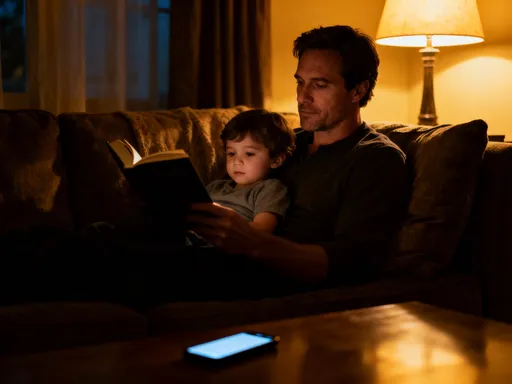
What made it stick was that it didn’t replace us—it amplified us. We still read the same way we always did—snuggled on the couch, books in hand. The app just added a layer, a little nudge to go deeper. And over time, those nudges became part of the rhythm of our evenings. We weren’t just reading the story. We were living it, talking through it, making it ours.
Beyond the Book: Unexpected Emotional Gains
I didn’t expect the conversations to spill over into real life. But they did. One night, after reading about a character who felt left out at school, my daughter said, “That’s kind of how I feel at soccer practice. Like I don’t really fit in.” My heart ached. I had no idea. We’d talked about soccer, sure—“How was practice?” “Did you score?”—but never about how it *felt*. That moment opened a door. We talked for nearly an hour. Not about drills or goals, but about friendship, belonging, the quiet ache of wanting to be seen.
Another time, my son was quiet after a chapter where the main character lied to protect a friend. The app asked, “Have you ever lied to help someone?” He didn’t answer right away. Later, in his voice note, he said, “I told my friend I liked his drawing, even though I didn’t. I didn’t want him to be sad.” I realized then how much he was thinking, feeling, processing—things he didn’t always know how to say out loud. The story gave him a safe way to explore those feelings, and the app gave him a way to share them.
These weren’t just reading discussions. They were emotional check-ins. The books became mirrors, reflecting pieces of their inner worlds. And because we were talking about characters first, it didn’t feel like an interrogation. It felt like exploration. I wasn’t asking, “Are you okay?” out of the blue. We were arriving at those conversations naturally, through the safety of a story.
I started to see shifts—not just in our talks, but in our days. My daughter was more open at dinner. My son initiated more conversations. We laughed more. And I felt more like a mom who *knew* her kids, not just one who took care of them. The app didn’t teach them empathy. It gave us a space where empathy could grow.
Why It’s Not Just Another Screen: The Design That Feels Human
I’ll admit, I was skeptical at first. Another app? Really? We already have enough screens in our lives. But this one felt different from the start. There were no ads. No data dashboards showing how we compared to other families. No pressure to “level up” or “beat your record.” It didn’t collect unnecessary information. It didn’t sell anything. It just… worked, quietly and respectfully.
The language was simple. No jargon, no complicated menus. The colors were soft—muted blues and warm grays—nothing harsh or flashy. Even the sound was gentle, like a page turning. It felt like the developers had actually been inside real homes, seen real families trying to connect in the middle of chaos. They didn’t design it for perfection. They designed it for *real life*—for tired parents, for distracted kids, for moments that don’t always go as planned.
What I appreciated most was how it protected our privacy. Our voice notes stayed private. No sharing, no posting, no public profiles. It wasn’t about performance. It was about presence. And that made us feel safe to be honest, to be messy, to be ourselves.
It didn’t try to replace conversation. It didn’t automate connection. It simply made space for it. Like a well-placed lamp in a dim room, it didn’t do the work for us—but it helped us see each other more clearly.
Building a Habit That Sticks: From Trial to Tradition
Three months in, I can honestly say something shifted. Reading together isn’t an event we schedule anymore. It’s part of who we are again. We don’t always use the app’s prompts—sometimes we just talk, naturally, because we’ve relearned how. But when we need a little help, the prompts are there, waiting like a trusted friend.
The app has faded into the background, like a well-worn bookmark that’s been in the same spot for years. It’s not the star of the show. We are. But it helped us find our way back to each other. And now, when my daughter says, “Can we read tonight?” it’s not because she has to. It’s because she wants to. Because she knows it’s not just about the story. It’s about us.
We’ve read 30 sessions now—tracked not because we’re counting, but because it’s nice to see how far we’ve come. We’ve laughed over silly characters, paused at sad moments, debated choices, imagined endings. We’ve built something much bigger than a reading habit. We’ve built a ritual of closeness, a daily reminder that we matter to each other.
And the best part? It didn’t require a weekend retreat, a parenting course, or a dramatic change. It started with one chapter, one question, one brave “let’s try this.”
More Than Pages Turned—A Family Reconnected
This journey wasn’t about raising better readers. It was about raising closeness. In a world that pulls families in ten directions at once—inbox alerts, social pressures, endless to-do lists—this simple tool helped us lean in, not apart. We didn’t just finish books. We built memories. We built trust. We built quiet moments of understanding that I’ll carry with me long after the stories are done.
The real magic wasn’t in the app’s features. It was in the space it created—space to listen, to share, to be seen. It reminded me that connection doesn’t have to be grand. It can be small. It can be a question after a chapter. A voice note in the dark. A shared laugh on the couch.
If you’ve felt that slow drift—the way time and stress can quietly erode the moments that matter—know this: it’s never too late to begin again. You don’t need a perfect plan. You don’t need to ban all screens or overhaul your schedule. You just need one small step, one invitation to talk, one book, one chapter at a time.
Because sometimes, the most powerful technology isn’t the one that does the most. It’s the one that helps us do less—and be more. And that’s a story worth sharing.